Please consider giving OptScale aStar on GitHub, it is 100% open source. It would increase its visibility to others and expedite product development. Thank you!
Webinar: Introducing the Hystax Global Partner Program. Register now
Webinar: Introducing the Hystax Global Partner Program. Register now
How much is your company actually spending on AI this month?
Cut it by 60%. Govern every AI prompt and agent. Learn more on optscale.ai
Hyundai AutoEver Europe GmbH serves as the dedicated IT company for Hyundai Motor Group across the entire European region — supporting Hyundai, Kia, Mobis, Glovis, and other HMG brands. Each subsidiary maintained its own on-premises infrastructure: physical and virtualised servers running VMware, Hyper-V, or other hypervisors, spread across Italy, Poland, the UK, Belgium, and beyond.
As the group’s footprint grew, management identified a critical security risk: local server environments in subsidiary offices did not meet HMG’s standards. The decision was made to consolidate everything into a centralised private cloud in Germany — and to close all regional on-premises data centres.
Why Hystax Acura
Hyundai AutoEver Europe first heard of Hystax through an internal recommendation within HMG, which highlighted Acura’s strong compatibility with OpenStack. Onboarding sessions with the Hystax team helped the System Integration team get started quickly, and the migration project moved forward from there.
A single tool for VMware, Hyper-V, and physical sources — with native OpenStack support built in from day one.
The Hystax Acura Solution
The source environment was deliberately heterogeneous: physical servers and virtualised workloads running VMware vSphere and Microsoft Hyper-V across a dozen European countries. Acura’s ability to handle mixed hypervisor sources in a single unified workflow — without requiring separate tooling per platform — was a decisive advantage for the System Integration team.
Acura’s portal offers several ways to build a migration plan — through the graphical interface, via JSON-based plan definitions, or entirely through the API. The System Integration team made use of the JSON option built into the Acura portal, which gave them precise, granular control over network parameters, subnet assignments, availability zones, and OpenStack flavors for their specific environment.
Logging & Observability
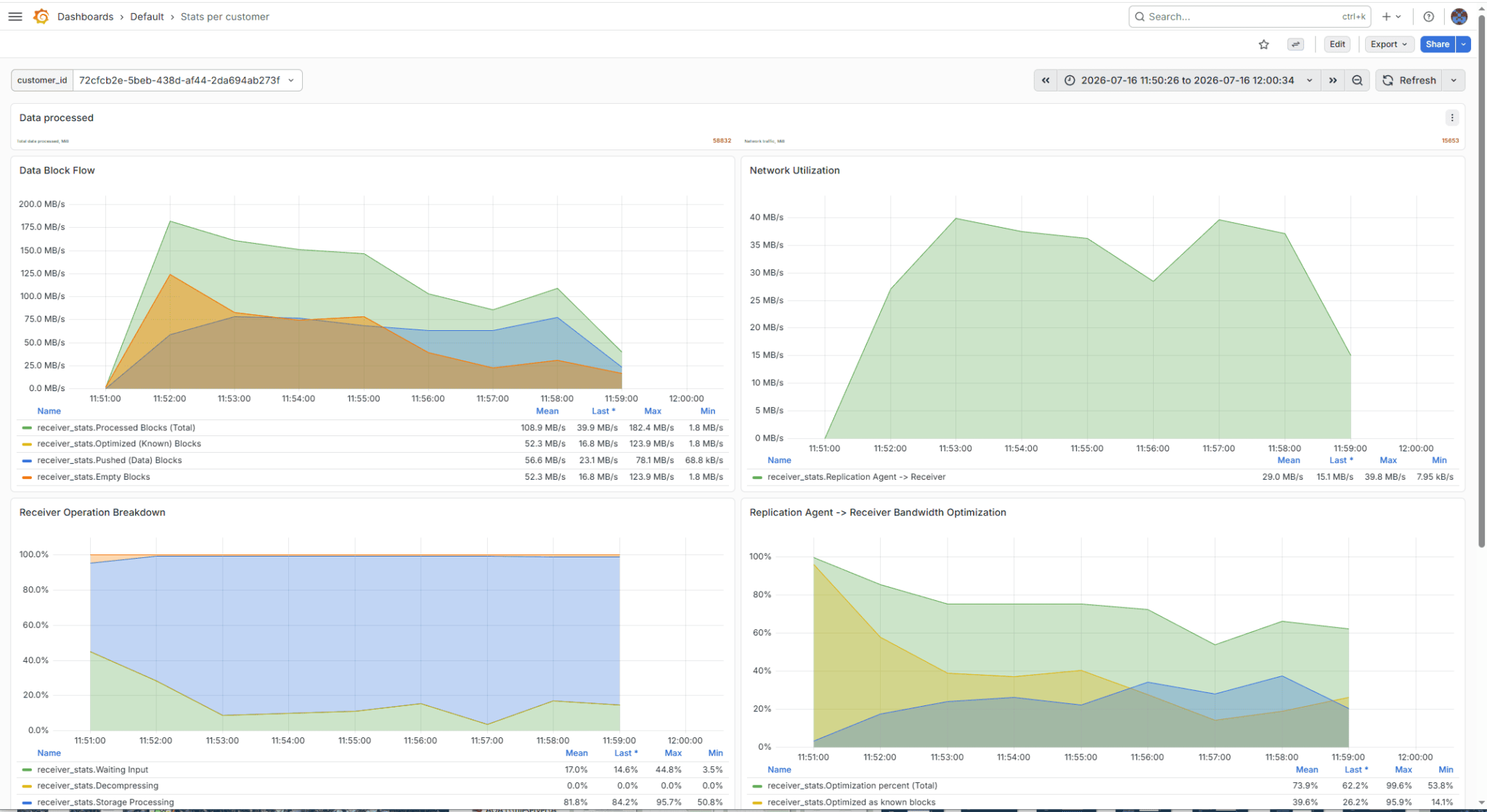
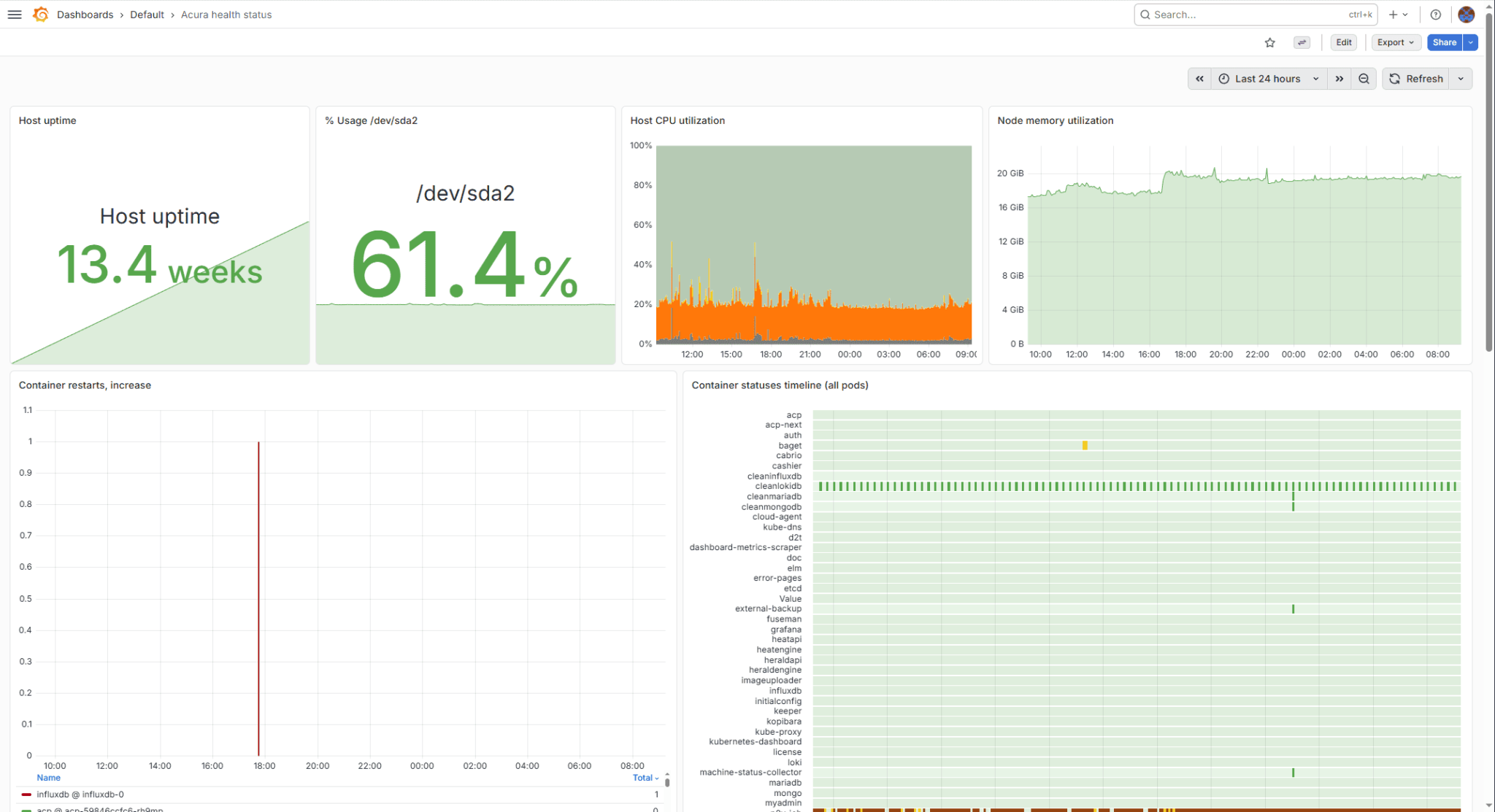
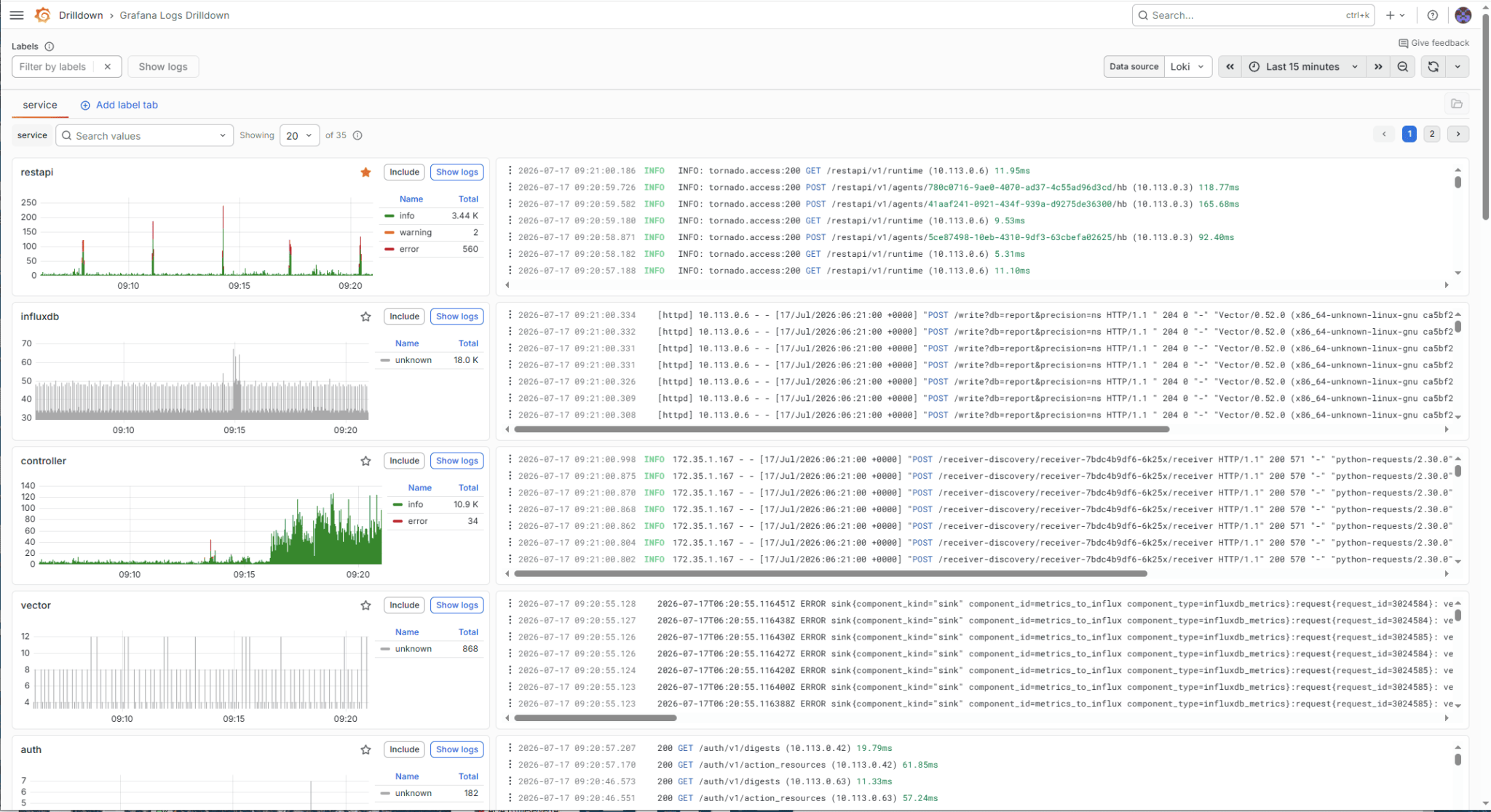
One aspect of Acura that the team highlighted was its detailed logging capability, accessible via Grafana. Every action performed by Acura is captured and structured in a self-explanatory way — providing full traceability of each migration step.
Grafana dashboard — data block flow, network utilisation and bandwidth optimisation per customer
“The logging is really good — very detailed and self-explanatory. Once you get comfortable with Grafana, exporting and analysing logs becomes really straightforward.”
Rathnakara Padubidri Dhananjaya Head of System Integration Section, Hyundai AutoEver Europe GmbH
Results & Impact
Single platform for diverse sources
Acura handled VMware, Hyper-V, and physical server sources in one unified workflow, eliminating the need for multiple migration tools.
Complete migration traceability
Grafana-based logging provided full visibility into every step, enabling fast diagnosis and resolution of issues.
Scalable methodology
The approach validated in Phase 1 (120 VMs) is designed to scale to 1,000+ VMs when the main HMG data centre in Germany is decommissioned.
Outstanding support
The Hystax support team was specifically praised for being knowledgeable, responsive, and genuinely helpful throughout.
“Acura took some learning, but once the team got the hang of it, we really valued how well it handled OpenStack — and the Hystax support team’s genuine helpfulness made a real difference throughout.”
Rathnakara Padubidri Dhananjaya Head of System Integration Section, Hyundai AutoEver Europe GmbH
Looking Ahead
Phase 1 covers roughly 120 VMs from subsidiary offices across Europe. The much larger Phase 2 — migrating the 1,000+ VMs hosted in Hyundai AutoEver’s own German data centre, which is being fully decommissioned under new group-wide instructions — is planned to begin once initial planning across multiple country IT teams is complete.
Having proven the approach at a smaller scale first, the System Integration team is well positioned to carry the same migration methodology — and the same tooling — into this next, much larger phase.
Stay Up to Date
Enter your email to be notified about new and relevant content.
Thank you for joining us!
We hope you'll find it useful
You can unsubscribe from these communications at any time. Privacy Policy