Whitepaper 'FinOps and cost management for Kubernetes'
Please consider giving OptScale aStar on GitHub, it is 100% open source. It would increase its visibility to others and expedite product development. Thank you!
Ebook 'From FinOps to proven cloud cost management & optimization strategies'
OptScale FinOps
OptScale — FinOps
FinOps overview
Cost optimization:
AWS
MS Azure
Google Cloud
Alibaba Cloud
Kubernetes
MLOps
OptScale — MLOps
ML/AI Profiling
ML/AI Optimization
Big Data Profiling
OPTSCALE PRICING
cloud migration
Acura — Cloud migration
Overview
Database replatforming
Migration to:
AWS
MS Azure
Google Cloud
Alibaba Cloud
VMWare
OpenStack
KVM
Public Cloud
Migration from:
On-premise
disaster recovery
Acura — DR & cloud backup
Overview
Migration to:
AWS
MS Azure
Google Cloud
Alibaba Cloud
VMWare
OpenStack
KVM

FinOps Best Practices in 2026: a practical guide to sustainable cloud cost optimization

Table of contents

Cloud adoption is no longer experimental. For most enterprises, cloud is the default infrastructure strategy. But as environments grow across AWS, Microsoft Azure, Kubernetes, and hybrid setups, costs become harder to predict and control.

This is where FinOps best practices come into play.

FinOps is not just about cutting cloud bills. It is a cross-functional discipline that connects engineering, finance, and business teams to create financial accountability in the cloud. When implemented correctly, it enables faster innovation, better resource management, and sustainable cost control.

In this guide, we’ll break down:

  • What FinOps best practices really mean today
  • Why they are critical for modern cloud management
  • Key benefits and common pitfalls
  • Practical approaches for AWS and Azure
  • Real-world examples of FinOps in practice
Image FinOps Best Practices

What are FinOps best practices?

FinOps best practices are structured processes, governance models, and technical mechanisms that help organizations:

  • Gain visibility into cloud spending
  • Allocate costs accurately
  • Optimize resource usage
  • Align cloud investments with business value

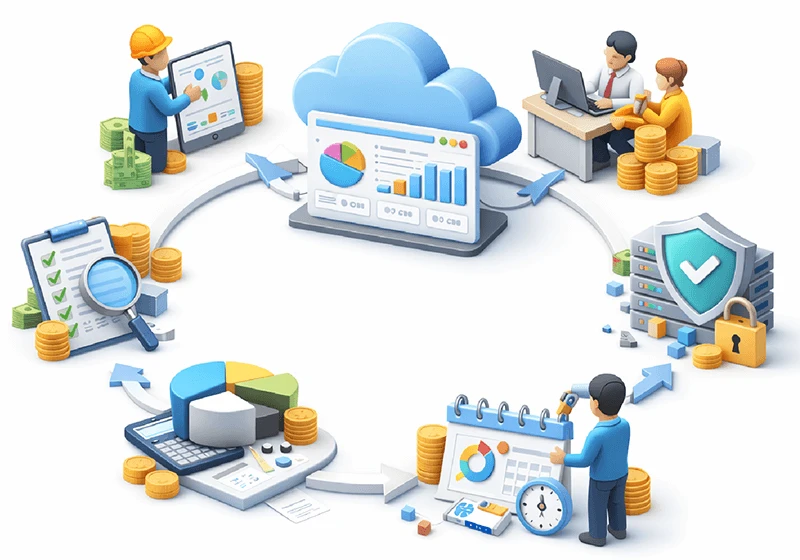
At its core, FinOps operates around three continuous phases:

  1. Inform – Make costs visible and understandable
  2. Optimize – Identify and eliminate waste
  3. Operate – Build cost awareness into everyday engineering decisions

Unlike traditional IT financial management, FinOps is iterative and engineering-driven. It assumes a dynamic, elastic infrastructure where costs change daily.

Modern finops best practices for cloud cost optimization focus not just on reducing spend, but on maximizing the value of every cloud dollar.

Why FinOps is crucial for cloud and resource management

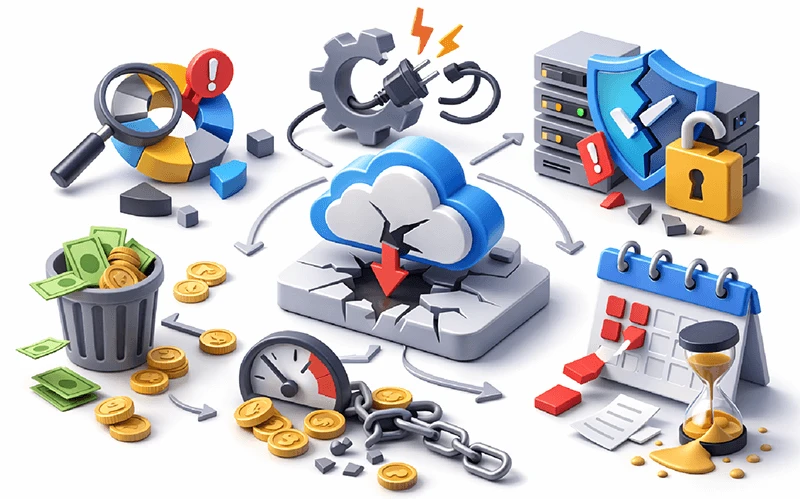
Without FinOps discipline, cloud environments typically suffer from:

  • Overprovisioned instances

Virtual machines and containers are frequently sized for peak load but rarely adjusted afterward. As a result, companies pay for CPU and memory capacity that sits unused most of the time — sometimes for months or even years.

  • Idle resources

Unattached volumes, inactive load balancers, orphaned IP addresses, stopped but still-billed instances, or Kubernetes nodes running without real workloads — these small leaks add up to significant monthly waste.

  • Forgotten test environments

Development and QA environments are often created quickly to support releases, but are not decommissioned afterward. Environments intended to run for a few days end up consuming compute and storage resources 24/7.

  • Unused storage and snapshots

Backups and snapshots are critical for resilience, but without lifecycle policies, organizations end up with redundant copies. Storage bills grow silently, especially in object storage and long-term retention tiers.

  • Lack of ownership over spending

When resources are not clearly mapped to teams, projects, or business units, no one feels responsible for optimization. Costs become “shared overhead,” and inefficiencies persist because accountability is unclear.

As organizations scale across multiple clouds, complexity increases:

  • Multi-account architectures

Large organizations often operate dozens — sometimes hundreds — of cloud accounts or subscriptions. This improves isolation and governance, but it fragments cost visibility.

  • Kubernetes clusters

Kubernetes adds flexibility — but also cost opacity. Pods scale dynamically, workloads move between nodes, and cluster resources are often overprovisioned “just in case.”

  • Dev/Test/Prod sprawl

As teams grow, so do environments. Development, staging, QA, and performance testing — all require infrastructure. But environments are rarely shut down when inactive.

  • Distributed teams with separate budgets

Modern organizations operate across regions and departments. Marketing, product, engineering, and data teams may all consume cloud resources independently.

FinOps introduces:

    • ✅ Financial transparency
    • ✅ Clear accountability
    • ✅ Standardized governance
    • ✅ Continuous optimization

In practice, this means engineers understand the cost impact of architectural decisions, and finance teams gain predictable cost models.

Cloud becomes not just flexible, but financially sustainable.

Core cloud cost optimization FinOps best practices

Core cloud cost optimization best practices

1. Make costs fully visible

You cannot optimize what you cannot see.

Best practice includes:

  • Detailed tagging strategies
  • Business unit cost allocation
  • Application-level breakdown
  • Real-time dashboards

Visibility should answer:

  • Which team owns this resource?
  • What project is this tied to?
  • Is this environment still needed?

2. Assign сlear ownership

Every cloud resource should have an owner.

Accountability drives behavior. When teams see costs tied directly to their applications or services, optimization becomes part of engineering culture — not a finance mandate.

FinOps is a shared responsibility model between:

  • Engineering
  • Finance
  • Product
  • Operations

3. Implement сontinuous Rightsizing

Rightsizing is not a one-time activity.

Cloud workloads change constantly. Instances that were appropriate six months ago may now be oversized.

Effective FinOps best practices include:

  • CPU and memory utilization analysis
  • Automated rightsizing recommendations
  • Ongoing instance type evaluation
  • Storage lifecycle management

4. Eliminate idle and zombie resources

Common examples:

  • Detached volumes
  • Unused IP addresses
  • Abandoned test clusters
  • Snapshots kept indefinitely

Automation and scheduled audits are critical.

5. Use commitment discounts strategically

Reserved Instances, Savings Plans, and long-term commitments can significantly reduce costs — but only if based on usage analysis.

Blind commitments create risk.

FinOps requires:

  • Historical usage modeling
  • Scenario simulations
  • Forecasting accuracy

6. Build cost awareness into engineering workflows

Modern teams integrate cost metrics into:

  • CI/CD pipelines
  • Architecture reviews
  • Infrastructure-as-Code reviews
  • Kubernetes deployment processes

Cost becomes a non-functional requirement — just like security and performance.

AWS FinOps Best Practices

For organizations operating on AWS, AWS FinOps best practices focus on leveraging native services and governance discipline.

Key areas include:

  1. Optimize EC2 and compute usage
  • Use Savings Plans and Reserved Instances strategically
  • Regularly evaluate instance families
  • Monitor burstable instance usage
  1. S3 lifecycle management
  1. Multi-account governance
  1. Monitor Kubernetes (EKS)
  • Optimize node sizing
  • Remove underutilized pods
  • Scale clusters dynamically

AWS environments often grow rapidly due to the richness of services. FinOps ensures innovation does not turn into uncontrolled cost expansion.

How Zoom, DoorDash, and Atlassian optimized AWS costs: 2024 and 2025 success stories

MS Azure FinOps best practices

In Azure environments, implementing Azure Finops best practices and effective cost optimization requires aligning governance controls with large-scale enterprise resource management.

Key focus areas:

  1. Azure cost management and budgets
  • Set department-level budgets
  • Enable proactive alerts
  • Monitor resource groups
  1. Reserved VM instances
  • Commit based on long-term workloads
  • Avoid overcommitting for variable usage
  1. Resource group governance
  • Enforce tagging standards
  • Apply Azure Policies
  1. Hybrid and enterprise agreements
  • Optimize licensing benefits
  • Leverage Azure Hybrid Benefit where applicable

Microsoft Azure environments often integrate deeply with enterprise identity and compliance models. FinOps principles must align with these governance frameworks.

Common pitfalls when implementing FinOps

Even with strong intentions, many organizations struggle to implement FinOps effectively. The problem is rarely technical — it is usually structural or cultural.

– Treating FinOps as a finance-only initiative

When FinOps is driven exclusively by the finance department, it becomes reactive. Finance teams analyze invoices after the money has already been spent — but they are not involved in architectural or engineering decisions that generate those costs.

The result:

  • Engineers deploy resources without cost awareness
  • Optimization requests feel like external pressure
  • Finance and engineering operate in silos

To avoid this, organizations should:
FinOps must be a shared responsibility model. Engineering teams should have real-time visibility into cost data. Finance should provide forecasting guidance. Leadership should align cloud spending with business objectives. True FinOps best practices create collaboration — not separation.

– Focusing only on cost-cutting

A common misunderstanding is that FinOps is simply about reducing cloud bills.

When organizations focus exclusively on cutting costs:

  • Innovation slows down
  • Teams become afraid to scale
  • Performance may suffer due to aggressive downsizing

FinOps is not about spending less at all costs. It is about spending wisely.

A stronger FinOps model requires:
The goal is value optimization — ensuring every dollar spent contributes to performance, scalability, reliability, or revenue. Sometimes increasing cloud spend is justified if it drives measurable business growth.

– One-time optimization projects

Some companies launch a “cloud cost reduction initiative,” reduce waste for a quarter, and then move on.

But cloud environments are dynamic:

  • New services are launched
  • Traffic patterns change
  • Teams scale
  • Architectures evolve

If optimization stops, waste gradually returns.

The more effective strategy is:
FinOps must be continuous. Rightsizing, commitment planning, anomaly detection, and governance reviews should be ongoing processes embedded in operational workflows—not quarterly cleanups.

– Ignoring cultural change

Technology alone cannot solve cost inefficiency.

If engineers are not educated about cloud pricing models:

  • Tagging policies are ignored
  • Budgets are bypassed
  • Governance rules are seen as obstacles

What should happen instead:
Organizations should introduce cost-transparency dashboards, regular cost-review meetings, and shared accountability models. When teams understand how infrastructure decisions affect business outcomes, behavior naturally changes.

– Lack of tooling

Spreadsheets and manual reporting may work for small environments. But in multi-cloud or Kubernetes-driven infrastructures, manual tracking becomes unreliable and slow.

Without proper tooling:

  • Cost data is delayed
  • Forecasting is inaccurate
  • Anomalies are detected too late
  • Optimization opportunities are missed

To fix this, teams need to:
Modern FinOps programs rely on automated cost visibility, rightsizing analysis, anomaly detection, and governance enforcement across AWS, Azure, and other environments. Automation is essential for scalable cloud cost optimization.

Benefits of strong FinOps best practices

Benefit What it means in FinOps practice Business impact
Predictable cloud spending Continuous monitoring, tagging, forecasting models, and budget alerts reduce billing surprises and improve financial transparency Improved financial planning and fewer unexpected budget overruns
Faster innovation cycles Engineers gain cost visibility early in the development process, allowing them to experiment responsibly without fear of uncontrolled spending Teams move faster while maintaining cost discipline
Improved ROI from cloud investments Resources are aligned with real workload demand through rightsizing, commitment optimization, and lifecycle management Higher infrastructure efficiency and better return per dollar spent
Better collaboration between finance and engineering Shared dashboards, regular cost reviews, and cross-functional accountability reduce friction between teams Stronger decision-making and reduced internal conflict around spending
Reduced operational waste Idle resources, overprovisioned instances, unused storage, and forgotten environments are systematically identified and eliminated Lower unnecessary expenses without impacting performance
Improved strategic planning Historical usage trends and forecasting data support data-driven capacity planning and investment decisions More accurate budgeting and long-term cloud strategy alignment

FinOps practices transform cloud cost management from reactive invoice analysis into a proactive, value-driven resource strategy aligned with business growth.

How introduce FinOps in your business

How to introduce FinOps in your business

1. Establish cost visibility first

Before optimizing anything, you need a clear and unified view of where money is being spent across all cloud accounts, subscriptions, and environments.

This means implementing centralized dashboards, cost allocation models, and usage breakdowns at the service, application, and team levels. Without transparency, optimization efforts become guesswork rather than strategy.

Additional insight: Visibility alone often reveals 10–20% of unnecessary spend without any architectural changes — simply by exposing idle or misconfigured resources.

2. Implement strong tagging governance

Tagging is the foundation of financial accountability in the cloud. Every resource should be mapped to an owner, an environment, a project, and a business function.

Define mandatory tagging policies and enforce them using cloud-native governance tools. Inconsistent tagging creates ambiguity about costs, preventing accurate reporting and forecasting.

Additional insight: Organizations that enforce structured tagging significantly improve budget forecasting accuracy and reduce internal cost disputes.

3. Identify quick optimization wins

Early success builds momentum. Start by targeting obvious inefficiencies such as:

  • Idle compute instances
  • Overprovisioned VMs
  • Non-production environments running 24/7
  • Unused storage volumes

These optimizations require minimal architectural change but deliver immediate financial impact.

Additional insight: Quick wins demonstrate the value of FinOps best practices and help secure long-term executive support.

4. Create cross-functional ownership

FinOps cannot succeed if finance and engineering operate separately. Establish shared accountability between cloud engineers, finance analysts, and product owners.

Regular cost review meetings and shared dashboards ensure that financial awareness becomes part of operational discussions — not an afterthought.

Additional insight: When engineers see cost metrics alongside performance metrics, infrastructure decisions become more balanced and strategic.

5. Introduce automation gradually

Manual reviews are initially necessary, but as environments scale, automation becomes essential. Implement automated rightsizing recommendations, anomaly detection, budget alerts, and environment scheduling.

Automation reduces human error and ensures continuous enforcement of governance policies.

Additional insight: Mature FinOps programs rely heavily on automation to maintain optimization at scale without slowing down innovation.

6. Measure progress continuously

FinOps is an ongoing discipline, not a one-time cost reduction project. Track KPIs such as:

  • Cost per workload
  • Resource utilization rates
  • Savings from commitment strategies
  • Forecast accuracy

Review trends regularly and adjust policies as infrastructure evolves.

Additional insight: Organizations that integrate cost metrics into engineering KPIs build long-term financial discipline into their cloud culture.

Mature FinOps programs eventually embed cost accountability directly into engineering workflows, making cloud financial management a natural part of daily operations rather than a reactive budgeting exercise.

Real-world FinOps in practice

FinOps is not theoretical. At cloud scale, financial accountability becomes a competitive advantage.

Many large technology companies operating in AWS environments have publicly shared how cost visibility and engineering ownership became critical as infrastructure expanded.

For example, Spotify has discussed embedding cost transparency directly into engineering dashboards. By giving teams visibility into infrastructure spend at the service level, they improved accountability and reduced unnecessary overprovisioning.

Similarly, Airbnb has shared lessons about scaling infrastructure responsibly. Rapid growth increased cloud complexity, which required disciplined resource governance and ongoing optimization to prevent cost inefficiencies from compounding.

In the enterprise segment, Capital One, an early large-scale cloud adopter, demonstrated that centralized visibility, combined with decentralized accountability, supports long-term cost discipline in cloud-native environments.

These examples highlight a consistent pattern:

FinOps is not about limiting innovation — it’s about giving engineers the data they need to make cost-efficient architectural decisions without sacrificing performance or scalability.

— Max Bozhenko, CTO at Hystax

Multi-Cloud FinOps in a growing SaaS company

Consider a mid-sized B2B SaaS provider operating across AWS and Azure with:

  • 50+ cloud accounts and subscriptions
  • Kubernetes clusters in production
  • Separate Dev, QA, and staging environments
  • Distributed engineering teams

Over time, they noticed:

  • Compute utilization below 40% on average
  • Idle development clusters running overnight
  • Unused storage accumulating across environments
  • Forecasting inaccuracies of 20–30%

After implementing structured FinOps best practices for cloud cost optimization, they introduced:

  • Mandatory tagging policies
  • Department-level cost dashboards
  • Automated non-production shutdown schedules
  • Continuous rightsizing analysis
  • Commitment discount planning based on historical data

Within six months:

  • Infrastructure waste decreased significantly
  • Forecasting accuracy improved
  • Engineering teams became more cost-aware
  • Optimization discussions shifted from finance-driven to engineering-led

This is what mature FinOps looks like:
Not reactive cost reduction — but continuous financial governance integrated into operations.

Turning FinOps strategy into operational practice

Organizations implementing FinOps often discover that visibility and governance require dedicated tooling, especially in multi-cloud environments.

At Hystax, we work with companies adopting structured FinOps best practices across AWS, MS Azure, and hybrid infrastructures. Our focus is on helping teams:

  • Gain granular cost transparency
  • Automate rightsizing and idle resource detection
  • Detect anomalies early
  • Improve forecasting accuracy
  • Align infrastructure spending with business priorities

Rather than treating cloud cost optimization as a one-time initiative, the goal is to build sustainable financial discipline into daily operations.

Enter your email to be notified about new and relevant content.

Thank you for joining us!

We hope you'll find it usefull.

You can unsubscribe from these communications at any time. Privacy Policy

News & Reports

FinOps and MLOps

A full description of OptScale as a FinOps and MLOps open source platform to optimize cloud workload performance and infrastructure cost. Cloud cost optimization, VM rightsizing, PaaS instrumentation, S3 duplicate finder, RI/SP usage, anomaly detection, + AI developer tools for optimal cloud utilization.

FinOps, cloud cost optimization and security

Discover our best practices: 

  • How to release Elastic IPs on Amazon EC2
  • Detect incorrectly stopped MS Azure VMs
  • Reduce your AWS bill by eliminating orphaned and unused disk snapshots
  • And much more deep insights

Optimize RI/SP usage for ML/AI teams with OptScale

Find out how to:

  • see RI/SP coverage
  • get recommendations for optimal RI/SP usage
  • enhance RI/SP utilization by ML/AI teams with OptScale